Things to Do in Grand Canyon in October
October weather, activities, events & insider tips
October Weather in Grand Canyon
Temperature, rainfall and humidity at a glance
Is October Right for You?
Weigh the advantages and considerations before booking
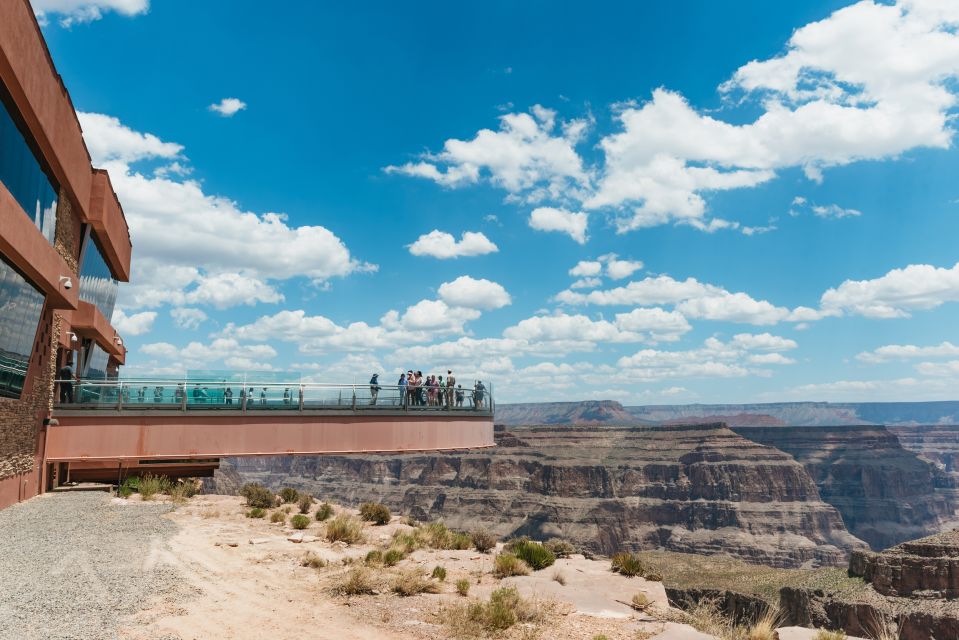
- + By October, the South Rim belongs to you. Gone are the 200-plus sunrise hordes at Mather Point, July's chaos reduced to a quiet few dozen. Ranger programs still run through mid-October. Free shuttles keep their full schedules. The visitor center still staffs its desks. What's missing is the shoulder-to-shoulder crush of summer. Step to the rim's edge and the canyon speaks: the Colorado River murmurs 1,600 m (5,249 ft) below, a canyon wren whistles from juniper scrub, wind sweeps the Kaibab Plateau with no human chatter to drown it out.
- + October owns the canyon. The sun drops low, slashing long shadows across Redwall Limestone cliffs and the Tonto Platform, summer's flat glare can't compete. Colors shift too: terracotta and deep red walls catch warm amber light at sunrise and sunset that'll make even veterans stop and stare. Serious photographers who know the canyon call October and November their months.
- + October flips the switch. After months when the inner canyon trails become hikeable again after the dangerous summer heat, you can finally descend without courting heatstroke. That 3.2 km (2-mile) section of Bright Angel Trail from the rim to the first water source at 1.5 Mile Resthouse? Still brutal in September. Same for the stretch to Indian Garden, now officially called Havasupai Gardens, at 4.8 km (3 miles). Both can hit life-threatening temperatures through September. But October mornings on the Tonto Platform feel different. The air has a dry clarity. The temperature is warm rather than punishing. Rangers are no longer posted at trailheads turning hikers back. Light changes everything. The inner canyon walls in October morning light turn a deep rust-red that the unforgiving midday sun bleaches away.
- + The North Rim doesn't shut until October 15, but for the first two weeks of the month, you've got it. This rim sits 365 m (1,198 ft) above the South Rim and draws a fraction of the crowds. Cape Royal Road. Point Imperial overlook at 2,683 m (8,803 ft). Widforss Trail weaving through ponderosa pines along the canyon edge. All of it quiet, something the South Rim never manages. Mid-October gold hits the aspen groves on the Kaibab Plateau around the North Rim, timing that lines up almost well with the closure window.
- − October 15 slams the gate shut on the North Rim, no exceptions, no reprieve. Want both rims? You need early October. That's it. They show the same canyon from opposite sides. But the views are so different you'll swear they're two separate parks. Miss the window and you're stuck with the South Rim by default, whether you planned it that way or not.
- − October weather will ambush you. First-timers never see it coming. The South Rim sits 1,600 m (5,249 ft) above the canyon floor, a thermal gradient that drops 10-15°C (18-27°F) between your car and your boots. That afternoon breeze you felt up top? Down below, it is hot, draining work. And when the sun vanishes, the South Rim turns brutal, below freezing by midnight isn't rare. Pack for one climate, hike into another, and you'll meet the canyon rescue team.
- − October in the Grand Canyon? Brutal. Overnight backcountry permits for the marquee inner-canyon campsites, Bright Angel Campground and Cottonwood Camp, turn into a blood sport as soon as the mercury drops. The Park Service's lottery locks these spots down months ahead. Walk up to the backcountry office hoping for tomorrow night and you'll get a polite, firm "no."
Best Activities in October
Top things to do during your visit
October is the month. Drop below the rim or you've blown it. Bright Angel Trail falls 1,448 m (4,750 ft) from rim to Colorado River across 15.3 km (9.5 miles) one-way, full round-trip takes days. Yet the stretch from trailhead to Havasupai Gardens at 4.8 km (3 miles) punches through the Tonto Formation, past the reddish-brown Redwall Limestone cliffs, into another climate zone. Start before 7am. That hour's light shifts the walls from daytime brown-gray to near-terracotta. The air carries warm sandstone and desert scrub. Canyon sounds, wind funneled between cliff faces, seep-spring trickles, rock wrens on switchbacks, erase the rim's noise. South Kaibab Trail gives wider, exposed ridge-walking with panoramic views but no water, October's cooler temps make the shadeless sections doable in morning hours. Guided inner-canyon hiking tours supply experienced leaders on the descent, worth booking if this is your first time below the rim.
446 km (277 miles) of whitewater. That is the Colorado River running through the canyon, and Lava Falls Rapid, rated up to 10 on the Grand Canyon's 10-point scale, is the rapid you hear before you see it: a deep, sustained roar that builds for the last quarter-mile as your raft approaches. October sits at the tail end of the commercial rafting season, which typically runs through mid-to-late October, and multi-day trips through canyon sections still operate. The water temperature holds at approximately 10°C (50°F) year-round regardless of air temperature, it emerges cold from the depths of Lake Powell through Glen Canyon Dam, so wetsuits are standard equipment on any October trip. Partial-canyon motorized trips entering from Diamond Creek upstream tend to have more available spots in October than full-length expeditions. The morning mist rising off the cold river as the canyon walls catch the first October sun is the thing canyon guides talk about in their sleep.
October on the South Rim Trail: 21 km of pavement, zero crowds. Walk the 13 miles between Hermit's Rest and South Kaibab trailhead and you'll claim overlooks most visitors never slow down for. The 1.6 km link from Mather Point to Yavapai Point is the canyon's clearest geology lesson, layers stack like textbook diagrams outside Yavapai Geology Museum, and the NPS displays inside are the system's sharpest. Hermit's Rest, Mary Colter's 1914 stone-and-timber hideout at the western end, feels rooted in the rim, rough-hewn arches, a stone fireplace, October chimney smoke curling through old wood. It earns more minutes than the average shuttle tourist gives it. Buses roll every 15-30 minutes; October weekdays they're half-empty, always free.
1,600 m (5,249 ft) of depth looks like a number on paper, until you see it from above. Ground-level visits can't hack it. The human eye simply fails to process that scale from the rim. Aerial tours at 300 m (985 ft) above the rim fix this. Suddenly you see the drainage system branching across the Kaibab Plateau for nearly 300 km (186 miles). The river becomes a green thread, hard to believe it is 90 m (295 ft) wide. Those formations you thought were individual buttes? They're part of one continuous plateau system. Obvious from the air. Invisible from the ground. October is the month. Summer monsoon season is over. Winter storms spot't started. The air is cleaner and calmer than any other time. Morning departures before 10am give you the best light and the smoothest ride. Canyon thermals build as the day heats up, some operators won't fly later. They want their passengers comfortable.
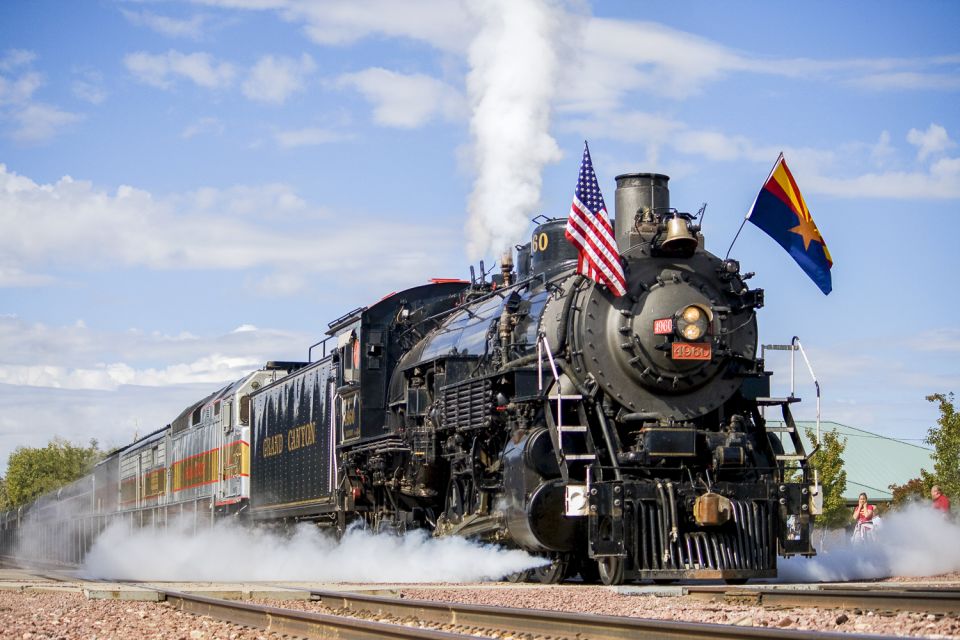
Skip the traffic snarl. The Grand Canyon Railway has been rolling between Williams, Arizona and Grand Canyon Village since 1901, and arriving by train, pulling straight into the 1910 depot, stepping onto the platform, walking 400 m (0.25 miles) to the rim edge, feels nothing like the car-and-parking-lot shuffle most visitors endure. The train leaves Williams at 9:30am, covers the 90 km (56 miles) to the South Rim in about two hours, and gives you a full afternoon at the canyon before the 3:30pm return. October rides are notably calmer than summer: the cars hold heat better in cooling autumn air, the onboard cowboy musicians and occasional mock hold-ups feel less frantic, and Williams itself, a Route 66 town with diners running since the 1950s, carries the exact charm of a place that peaked in 1958 and never quite left. The train also erases the South Rim parking headache: main village lots fill by 9am even in October on weekends.
The Milky Way isn't a rumor here, on a clear October night at Grand Canyon's South Rim, the band looks like someone dragged a wire brush across black velvet. Dust lanes, star clusters, other arms of the galaxy: you can see texture, depth, the whole structure. International Dark Sky Park designation means business. The core clocks out around 9pm in October. Yet the galactic band stays overhead until midnight, sharper than in summer because the haze is gone. Temperature plummets fast at 2,133 m (6,996 ft), afternoon warmth to single-digit Celsius (upper 30s Fahrenheit) within hours. Casual visitors bail. The rest of us stay. Ranger-led night sky programs at Mather Point and Yavapai Point keep running through late October. Stand at the rim's edge in that darkness and you'll swear you can feel the canyon below, even when you can't see a thing.
Didn't see anything interesting yet?
Browse Viator's full catalog of tours, day trips, food experiences, and private guides in Grand Canyon.
See All Grand Canyon Tours on ViatorPacking Checklist
Bookmark this page — your progress is saved between visits
Climate-specific gear, brand recommendations, and what to leave at home.
View Grand Canyon Packing List →Essential Tips
Insider knowledge and common pitfalls to avoid
Ready to plan your trip to Grand Canyon?
Now that you've got the research covered, here's where to go next.
Book Experiences in Grand Canyon
Top-rated things to do in Grand Canyon this October