
Things to Do in Grand Canyon
A mile of empty air where the earth used to be, and it still wins
Top Things to Do in Grand Canyon
Find activities and tours you'll actually want to do. Book through our partners -- no booking fees.


Plan Your Trip
Essential guides for timing and budgeting
Climate Guide
Best times to visit based on weather and events
View guide →Day Trips
The best excursions and nearby destinations worth the journey
Explore day trips →Where to Stay
Best neighbourhoods, hotel picks, and booking tips
Find hotels →Travel Insurance
What's required, what coverage matters, and how to get a quote
Read guide →What to Pack
Climate-specific gear, essentials, and what to leave at home
See packing list →When Should You Visit Grand Canyon?
Tap a month for weather, crowds, and highlights
View full year-round climate guide →
Your Guide to Grand Canyon
About Grand Canyon
The Grand Canyon doesn't ease you in. You drive through flat, unremarkable ponderosa pine forest along the South Rim approach, and then the ground simply stops. One step from the parking lot at Mather Point, the earth drops away into a chasm so enormous your depth perception short-circuits. The canyon is 277 miles long, up to 18 miles wide, and more than a mile deep, and none of those numbers prepare you for the physical fact of standing at the edge and feeling the updraft carry the faint mineral smell of Kaibab limestone and sun-baked sandstone into your face.
The Colorado River, the thin jade-green ribbon that carved all of this over six million years, is barely visible from the rim, a thread of sound you can only hear if the wind drops and the tour groups go quiet. That silence is the thing nobody warns you about. The South Rim draws the crowds, and between May and September the shuttle buses along Hermit Road run standing-room-only, the parking lots at Grand Canyon Village fill before 10 AM, and the Bright Angel Trailhead looks like a theme park queue.
The North Rim, an hour longer to reach and open only from mid-May through mid-October, sits a thousand feet higher and runs cooler and emptier, the kind of place where you can eat breakfast at the Grand Canyon Lodge dining room with the canyon framed in the window and share the view with maybe a dozen other people. But even the South Rim earns its crowds.
Catch Hopi Point at sunset, when the Redwall Limestone bands turn the color of raw copper and the shadows in the side canyons deepen to violet, and the scale of the thing hits you in a way that photographs will never reproduce. This is not a place you visit. It is a place that recalibrates what you think geology means.
Travel Tips
Transportation: Grand Canyon's South Rim runs a free shuttle bus system from March through November along three routes, and during peak season it is not optional, it is the only way to reach most of Hermit Road's western viewpoints. The shuttles run every 10 to 15 minutes and the Village Route connects the visitor center, lodges, and trailheads. If you are driving in from Flagstaff, the South Entrance through Tusayan is roughly 80 miles and takes about 90 minutes. But the entrance station queue during summer mornings can add 45 minutes of idling. The workaround is the East Entrance via Desert View, which rarely backs up and drops you at the underrated Desert View Watchtower first. The Grand Canyon Railway from Williams is a surprisingly pleasant alternative that eliminates the parking problem entirely, a two-and-a-half-hour ride through high desert that arrives directly in Grand Canyon Village.
Money: Everything inside the park costs more than you expect, and the options are limited enough that you cannot shop around. The general stores at Grand Canyon Village and Desert View carry basics at a steep markup, and the sit-down restaurants at El Tovar and the Arizona Room price well above what you would pay in Flagstaff for the same plate. The move is to stock a cooler in Flagstaff or Williams before you enter the park, where groceries run at normal prices, and treat the in-park dining as a deliberate splurge rather than a default. Card payments work everywhere on the South Rim. But cell service is unreliable below the rim and spotty in parts of the Village, so carry some cash for tip jars and the occasional dead terminal. The park entrance fee covers a full seven days, so if you are on a road trip, you can leave and come back.
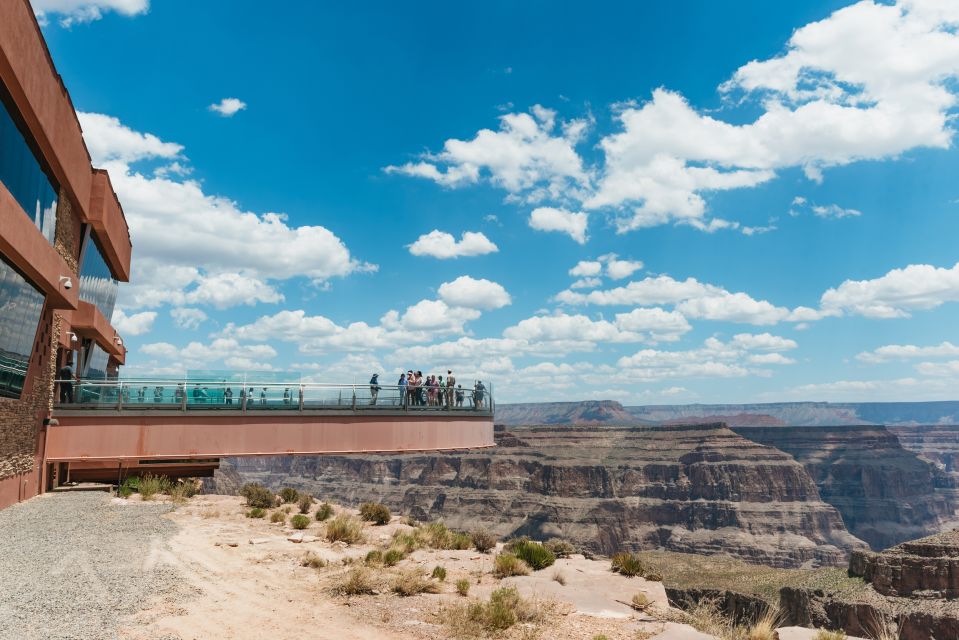
Cultural Respect: The Grand Canyon is sacred land for multiple Indigenous nations, including the Havasupai, Hualapai, Navajo, Hopi, and Zuni, and that context tends to get flattened into gift shop turquoise. The Desert View Watchtower, designed by Mary Colter in 1932, includes Hopi murals that are genuine cultural artifacts, not decoration. If you visit the Skywalk on the West Rim, you are on Hualapai Tribal land with its own rules, including a strict no-personal-cameras policy on the glass bridge. Havasupai Falls requires a separate tribal permit that books out months in advance. On the trails, the etiquette that matters most is yielding to uphill hikers and to mule trains, the mules have the right of way and you step to the inside of the trail, against the wall, not the drop side. Cairns mark the route below the rim. Do not stack new ones or rearrange them. People navigate by those.
Food Safety: The real food danger at the Grand Canyon is not what you eat but what you fail to carry. Below the rim, there are zero food vendors, zero water sources you can drink without treatment until you reach Phantom Ranch at the bottom, and the dry air dehydrates you faster than you realize. The park service is not exaggerating when they say to carry a gallon of water per person for a day hike below the rim, and salty snacks matter more than energy bars because you will sweat out electrolytes in quantities the elevation and wind disguise. On the rim, the cafeteria at Maswik Lodge is the most reliable budget option, turning out decent Southwest-spiced fare without the wait times of El Tovar. The Yavapai Tavern does a surprisingly good elk burger. Tusayan, the small gateway strip just outside the South Entrance, has a handful of places that range from passable to forgettable, none worth a special trip but all cheaper than eating inside the park.
When to Visit
The Grand Canyon's seasons punish the unprepared. Pick your month by pain tolerance, not postcard views. Summer, June through August, is when most people come, and it is the worst time to hike below the rim. Phantom Ranch on the canyon floor hits 46 degrees Celsius, 115 Fahrenheit, and the inner gorge traps heat like a closed oven.
The South Rim itself stays around 27 to 30 degrees Celsius (80 to 85 Fahrenheit), but peak crowds, packed parking, and lodges booked six months out make it the priciest, least fun window beyond a quick rim stop. Shuttle buses jam, Bright Angel Trail feels like a freeway, and scoring a table at El Tovar without a reservation is impossible.
Spring, April and May, is the sweet spot for most travelers. Rim temps hover at 15 to 20 degrees Celsius (60 to 68 Fahrenheit), wildflowers pop along the Rim Trail, and the hordes have not yet arrived. Lodging is still competitive but not hopeless, and the inner canyon warms enough for river trips without July's furnace.
The catch is wind. April afternoons on the South Rim can howl hard enough to make Lipan Point miserable, and late snow squalls happen. Autumn, September through early November, is the South Rim's quiet ace. After Labor Day the crowds vanish, temperatures settle at 18 to 22 degrees Celsius (65 to 72 Fahrenheit), and the low sun turns limestone layers into a light show painters still can't capture.
October rules. Cottonwoods along Bright Angel Creek flash gold and the North Rim enters its final weeks before mid-October closure. Hotel rates drop, sometimes sharply. Winter, December through February, is cold, silent, and underrated. South Rim temperatures sit around minus 2 to 7 degrees Celsius (28 to 45 Fahrenheit), and snow dusts the rim so red rock glows against white.
The North Rim shuts completely, lodge and road gated. The South Rim stays open year-round, with far fewer visitors and lodging you can book. The trade-off is ice. Upper stretches of Bright Angel and South Kaibab turn slick and demand microspikes, and rim roads can close after storms. Families should aim for late September and early October for mild weather and tame crowds.
Solo hikers and backpackers should target April or October for inner-canyon forays. Budget travelers score the deepest cuts in January and February, when even in-park lodges slash rates and Flagstaff hotels cost a fraction of summer prices. Approach August with caution. The Arizona monsoon spawns afternoon thunderstorms that can flash-flood side canyons and turn exposed overlooks into lightning rods.
The storms are spectacular and double rainbows unreal. But residual heat, sudden deluges, and trail closures make August the roughest month of the year.
More Ways to Experience Grand Canyon
Tours, day trips, and local experiences curated by on-the-ground operators.
Didn't see anything interesting yet?
Browse Viator's full catalog of tours, day trips, food experiences, and private guides in Grand Canyon.
See All Grand Canyon Tours on Viator