Things to Do in Grand Canyon in March
March weather, activities, events & insider tips
March Weather in Grand Canyon
Temperature, rainfall and humidity at a glance
Is March Right for You?
Weigh the advantages and considerations before booking
- + Early March lands you in the canyon before spring break stampedes arrive. Mather Point and Yavapai Observation Station are busy but still navigable, grab a rim wall spot at sunrise without elbowing tour groups. The window is real. Narrow. And it collapses fast: by March 14, the South Entrance Station queue forms before 8 AM.
- + March light is different. The sun hangs low, slicing shadows across Kaibab Limestone and Tonto Platform, angles that photographers chase for decades. Canyon walls sharpen. Rust Hermit Shale, cream-gray Coconino Sandstone, dark Vishnu Basement Rocks far below, each layer snaps into focus under this tilted light. Best show? Forty-five minutes after dawn. One hour before dusk. Summer's flat glare erases depth. March refuses.
- + March in the inner canyon: 30°C (86°F). The South Rim? 15°C (27°F) cooler at 2,134 m (7,000 ft). One afternoon on the Bright Angel Trail, you'll walk through three, maybe four seasons. Drop to Havasupai Gardens, 1,480 m (4,856 ft) below the rim, and cottonwoods are leafing out. Early wildflowers punch through red dust. Up top, frost still clings to north-facing rock. That temperature swing? It is the canyon's geology turned into weather you can feel.
- + Condor viewing stays excellent through March. California condors, North America's largest land bird, with wingspans reaching 3 m (9.8 ft), ride the thermals above the canyon walls each morning. The areas around Navajo Point and the Mather Point overlook deliver condors surfing updrafts by 9 AM, close enough to read the numbered wing tags the recovery program uses to track individuals. Fewer than 350 California condors existed anywhere in the world in the 1980s. Watching one bank over a billion-year-old canyon wall is, plain and simple, worth building an itinerary around.
- − March 14 through March 31? The South Rim becomes a traffic jam with a canyon attached. Parking at Grand Canyon Village hits capacity before 9 AM most days, every single one. The free shuttle soaks up some pressure, sure. But Bright Angel Trailhead, where day hikers mass, turns into a pedestrian pile-up by mid-morning. Walking rim-to-rim now demands patience you probably didn't pack. Arrive during this window? Make the shuttle your main ride, not your backup.
- − March at the South Rim doesn't do gentle variability. You'll start a hike in fleece and finish in a T-shirt. You'll leave Bright Angel Lodge in sunshine and return to find the rim lost in blowing snow. The inner canyon runs warm, sometimes 30°C (86°F) near the Colorado River. But the rim at 2,134 m (7,000 ft) can swing 15°C (27°F) between noon and nightfall. Snow in March? Not unusual. Check the forecast for the South Rim specifically, not Flagstaff, not Williams, not the inner canyon, the night before any hike. It isn't optional.
- − March spring break dates are among the most competitive draws of the year. Inner canyon overnight permits for Bright Angel Campground and Phantom Ranch fill up through the lottery system that opens four months in advance. If you want to wake up beside the Colorado River during the third or fourth week of March, you needed to enter that lottery in November. Walk-up cancellation permits exist. But require showing up at the Backcountry Information Center at opening time and treating availability as luck rather than a plan.
Best Activities in March
Top things to do during your visit
21 km (13-mile) of paved Rim Trail start at Grand Canyon Visitor Center and Mather Point, then turn to packed dirt on the haul west to Hermits Rest. Show up at Mather Point or Yavapai Point before 6:30 AM in March and you'll watch first light brush the upper walls amber while the inner gorge stays purple-shadowed, the whole swap takes maybe 25 minutes before the sky dulls to blue. But those 25 minutes are what people still quote decades later. Early rim air sits cool, 7-10°C (45-50°F), so layers justify every gram in your pack. March's low sun makes this stroll far more photogenic than the identical route in July, when high-noon glare irons the geology into one pale slab. Allow 2-3 hours for the one-way walk from Mather Point west to Mohave Point, then catch the shuttle back to the Village. Push on to the eastern arm toward Desert View, past Yavapai Observation Station, if you want to ditch the spring-break crowd, most tourists cluster at the three or four overlooks nearest the parking lot.
Forget the rim selfies. The Bright Angel Trail is the only way to feel the Grand Canyon instead of just photographing it. The trail drops 1,370 m (4,500 ft) from the South Rim to the Colorado River over 15.5 km (9.6 miles) one way, descending to the river and returning in a single day is dangerous, and the park does not mince words. But the first 3.2 km (2 miles) to the 1.5-Mile Resthouse, or the 4.8 km (3-mile) push to Havasupai Gardens, shoves the layered geology in your face and delivers a temperature swing that makes March hiking here worth building a trip around. Start no later than 7 AM to dodge the spring break scrum at the trailhead. By the time you're 500 m (1,640 ft) below the rim, the canyon walls close in and the rim chatter vanishes, the Tapeats Sandstone pressing close on both sides, 530 million years old, slightly orange in morning light. The inner canyon at Havasupai Gardens in March tends to run 25-28°C (77-82°F) at midday, noticeably warmer than the cold rim you started from. Carry at least 0.5 liters (17 oz) of water per hour of hiking, even in March, the warmth sneaks up on you below the rim in a way that cooler rim temperatures do not prepare you for.
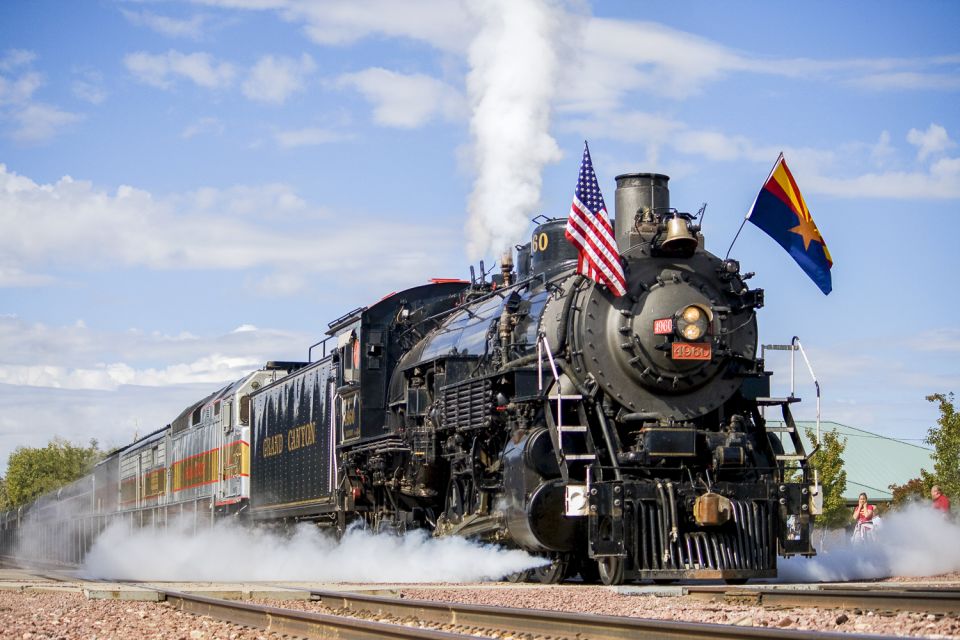
The Grand Canyon Railway runs from Williams, Arizona, a Route 66 town 89 km (55 miles) south of the canyon, to Grand Canyon Village in a restored early-20th-century train car. The 2.25-hour journey through ponderosa pine forest is deliberately, usefully slow. In March, the train tends to run less crowded than summer, spring break weeks being the exception, and there's something specific to late winter about the light through the train windows as the ponderosa forest gradually gives way to pinyon-juniper scrub while the train climbs toward the rim. Onboard entertainment varies by car, parlor cars sometimes feature cowboy performers, which is either charming or theatrical depending on your tolerance for that kind of Americana. The practical advantage for March visitors is concrete: arriving by train skips the South Rim parking situation entirely. The train deposits you directly at the Grand Canyon Village depot, a short walk from the rim, the shuttle stops, and the Bright Angel Trailhead. A full day from Williams gives you roughly 3-4 hours at the rim before the return departure.
The Colorado runs cold in March, around 9-10°C (48-50°F), and that is when commercial operations start ramping up. Smooth-water float trips through sections of the lower canyon run from access points along the Navajo Nation roads and from Lee's Ferry, 64 km (40 miles) north of the main South Entrance. These aren't the multi-day white-water rafting expeditions that require months of permit planning. From water level, the canyon walls press close in ways the rim never reveals. The silence between the walls, broken only by the current's pull and the occasional red-tailed hawk working the thermals, is the opposite of the crowded rim experience. The oldest exposed rock in the canyon system becomes visible from river level: the Vishnu Basement Rocks, a 1.7-billion-year-old black schist that runs like dark veins through the canyon floor. Multi-day white-water expeditions launch from Lee's Ferry and run the full 446 km (277-mile) canyon corridor over 6-18 days. These require permits obtained through a heavily subscribed lottery. Commercial operators run a limited number of motorized and oar-powered trips for which individual spots can be reserved.
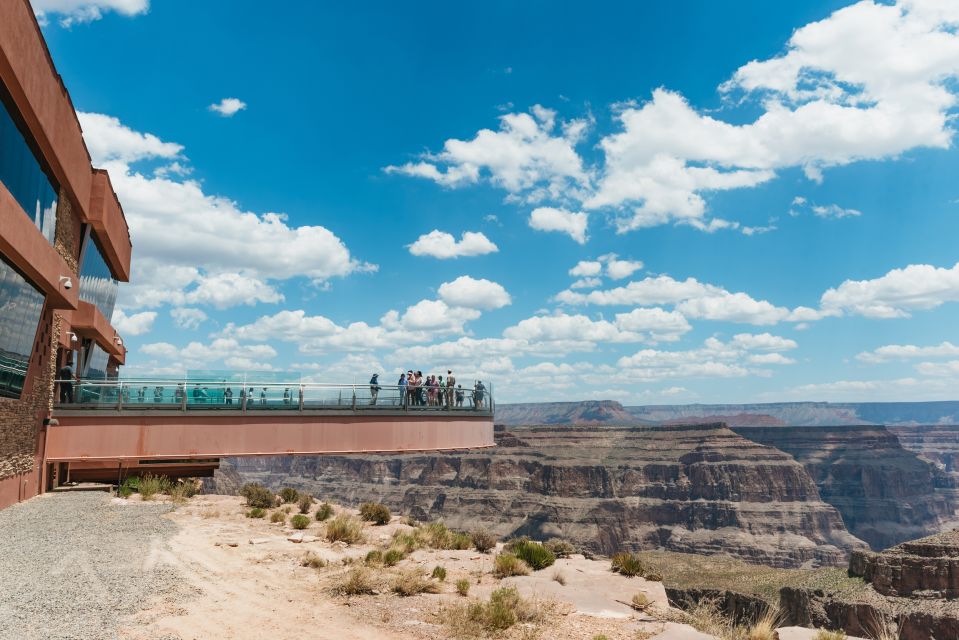
Desert View Drive runs 40 km (25 miles) along the South Rim from Grand Canyon Village east to Desert View. The 23 m (75 ft) Desert View Watchtower, Mary Colter's 1932 structure perched on the South Rim's highest point at 2,305 m (7,560 ft), surveys the canyon's eastern arm. On clear March days, you'll spot the Painted Desert rolling northeast into the Navajo Nation. Eight distinct overlooks punctuate the drive. Each frames the canyon from a different angle. Lipan Point delivers the broadest view of the Colorado River's visible arc. Navajo Point, 1.6 km (1 mile) before Desert View, attracts noticeably fewer visitors than Village-area spots. Morning thermals here concentrate condors in lazy spirals. March brings snow dusting the North Rim. Still closed to vehicles, the rim sits 16 km (10 miles) across the canyon void. This creates a sharp visual contrast, warm inner canyon against winter-holding highlands. Summer visitors miss this entirely. The Tusayan Ruins site lies 6.4 km (4 miles) west of Desert View. An 800-year-old Ancestral Puebloan pueblo stands here, plus a small museum. Allow 45 minutes if you want context beyond the geology.
South Kaibab Trail gives you something Bright Angel can't, ridgeline descent, not corridor. Three directions of view at once. Four sometimes. No walls boxing you in. The catch? No water. None. Grades kick harder. Sun owns the trail. March mornings bring knife-edge wind that'll slice through layers, then by 10 AM you're sweating. Perfect filter for hikers who want the canyon without the Bright Angel Trailhead zoo. Shuttle only. Kaibab/Rim Route from the Village drops you at South Kaibab Trailhead, built-in crowd control during spring break. Day-trippers can't resist Bright Angel's drive-up parking. They'll skip the shuttle. Good. Cedar Ridge sits 2.4 km (1.5 miles) down, 98 m (320 ft) below the rim. From the ridge you'll stare across at O'Neill Butte and the Tonto Plateau. The Colorado River glints silver, 1,200 m (3,937 ft) straight down. A thread of metal in rock. Start before 7 AM in March. Catch the canyon in shadow. The geological layers will shout their colors at you, red, rust, ochre, before the sun flattens everything into glare.
Packing Checklist
Bookmark this page — your progress is saved between visits
Essential Tips
Insider knowledge and common pitfalls to avoid
Book Experiences in Grand Canyon
Top-rated things to do in Grand Canyon this March
Didn't see anything interesting yet?
Browse Viator's full catalog of tours, day trips, food experiences, and private guides in Grand Canyon.
See All Grand Canyon Tours on ViatorFrequently Asked Questions
What is there to do at the Grand Canyon in March?
March offers excellent hiking on trails like Bright Angel and South Kaibab before summer heat arrives, with daytime highs around 50-60°F on the South Rim. You can watch sunrise at Mather Point without the May-August crowds, spot California condors (who begin nesting this month), and explore the Desert View Watchtower. Snow may linger on the North Rim, which stays closed until mid-May, but the South Rim is fully accessible.
What are the best things to do in Grand Canyon in March?
Early-morning hikes down the Bright Angel Trail let you experience multiple climate zones before afternoon winds pick up, and ranger-led geology walks (free, starting at 10 AM from Yavapai Geology Museum) explain the canyon's 1.8 billion years of rock layers. Photographers favor the softer light and occasional snow-dusted rim views. If you're willing to brave cooler evenings, the night skies are exceptionally clear, the South Rim is an International Dark Sky Park.
What can you do at the Grand Canyon in March?
You can day-hike partway into the canyon (many turn around at the 1.5-mile resthouse on Bright Angel), bike the Hermit Road Greenway Trail while it's still car-free, and visit the Hopi House for authentic Native American art without summer tour-bus crowds. March is also prime time for spotting elk near the El Tovar Hotel at dawn. If snow's still on the ground, ranger programs shift indoors to the visitor center's theater.
Is March a good time to visit the Grand Canyon?
Yes, March balances comfortable hiking weather with far fewer visitors than April-October. Lodges like Bright Angel and El Tovar often have same-week availability (versus six-month advance bookings in summer), and Hermit Road is open to private vehicles until late March, saving you shuttle wait times. Expect temperatures from the mid-30s at sunrise to the upper 50s by afternoon on the South Rim, with occasional snow flurries.
What is the weather like at the Grand Canyon in March?
The South Rim averages 28°F at night and 56°F during the day, with about five days of light snow or rain. Mornings can be icy on shaded trails, bring traction devices like Yaktrax if you're hiking early. The canyon floor at Phantom Ranch is 20-25°F warmer, so layers are essential if you're descending. Wind gusts above 30 mph are common in the afternoons, at exposed viewpoints like Desert View.
Are all Grand Canyon facilities open in March?
The South Rim is fully operational year-round, including lodges, restaurants, and the visitor center. The North Rim remains closed until May 15 due to snow (Highway 67 is gated). Desert View Drive and Hermit Road are both open, though Hermit Road switches to mandatory shuttle service around late March, check the park website for the exact date each year.
Do I need reservations to visit the Grand Canyon in March?
No timed-entry reservations are required, and the entrance gate rarely has the 30+ minute waits you'd see in July. However, if you're planning to hike to Phantom Ranch overnight, book your bunk months ahead, those fill up year-round. Rim lodging is much easier to secure in March than summer, often with availability just a week or two out.
What should I pack for the Grand Canyon in March?
Layers are critical: start with a base layer, fleece, and windproof jacket (mornings can be near freezing), then shed down to a t-shirt by midday if the sun's out. A warm hat, gloves, and sunscreen are all necessary, the 7,000-foot elevation means intense UV even when it's cold. If you're hiking below the rim, pack microspikes or traction cleats for icy patches on north-facing switchbacks.
Can you hike to the bottom of the Grand Canyon in March?
Yes, but it's a serious undertaking, the round-trip from the South Rim to the Colorado River is 16-19 miles depending on the trail, with a 4,800-foot elevation change. Most March hikers do an out-and-back to the 1.5-mile or 3-mile resthouses on Bright Angel Trail instead (3-6 hours total). If you're attempting the full descent, start before sunrise to avoid afternoon winds and allow 10-12 hours. Overnight hikers need a backcountry permit reserved months in advance.