Things to Do in Grand Canyon in May
May weather, activities, events & insider tips
May Weather in Grand Canyon
Temperature, rainfall and humidity at a glance
Is May Right for You?
Weigh the advantages and considerations before booking
- + Desert paintbrush, cliffrose, Apache plume, May slaps color across the rim and upper canyon walls. The Tonto Platform, that broad, flat ledge 500 m (1,640 ft) below the South Rim, greens up in May in ways it simply won't by July, when everything burns to dust. Hiking Bright Angel or South Kaibab Trail? Stop. The color contrast against the red Redwall limestone is worth every second.
- + May at the South Rim is your sweet spot. At 2,134 m (7,000 ft) elevation, this place feels like another planet compared to the canyon floor. The rim hits 31°C (88°F) during the day, hot, sure, but you can still knock out the 16 km (10-mile) Rim Trail before 10 AM or after 4 PM. By July? Forget it. The air stays dry and keeps moving, and nights drop to a comfortable 24°C (75°F).
- + Beat the rush, May is your window. Summer chaos, US school holidays, international visitors, RV caravans all the way back to Tusayan, starts mid-June and never lets up. At 8 AM, Mather Point still has breathing room. You won't circle Grand Canyon Village for 40 minutes hunting a parking spot. The free South Rim shuttle buses run on time, not crammed like sardines.
- + May 15 flips the switch. The North Rim opens May 15, 360 km (225 miles) by road from the South Rim, and the crowds spot't caught up. It sits 365 m (1,200 ft) higher, stays almost always less crowded, and still delivers the kind of solitude the South Rim lost years ago. Time your trip to straddle May 15 and you'll face a real choice: two entirely different canyon experiences. Good problem.
- − By late May the Inner Canyon is lethal. Phantom Ranch, tucked at the bottom of Bright Angel Trail beside the Colorado River, sits at only 760 m (2,500 ft) elevation. That's 1,370 m (4,500 ft) below the South Rim. Inner Canyon temperatures in late May regularly hit 38-43°C (100-110°F) by early afternoon. The NPS doesn't suggest caution here, they post explicit warnings calling it dangerous and document the rescues it generates each season. Early May and pre-dawn starts remain the only practical window for any inner canyon hiking.
- − Afternoon thunderstorms crash in May, Arizona's pre-monsoon instability begins. Your rainy days compress into afternoon and evening storms. Clouds build over the Kaibab Plateau by noon. Thunder echoes off limestone cliffs by 2-3 PM. The danger isn't rain, it's flash flooding. Slot canyons and side drainages like Cathedral Wash and Deer Creek turn deadly fast. Check current weather at a ranger station before entering any side canyon. The sky at the trailhead means nothing.
- − Havasupai Falls is gone. The Havasupai campsite and lodge reservations open February 1 each year for the entire coming season and sell out within hours, every single year. If you're reading this in March or later and spot't booked, May 2026 access to Havasu Falls, the turquoise waterfalls roughly 22 km (14 miles) from the trailhead at Hualapai Hilltop, is probably impossible. This isn't a gentle suggestion to book early. The site is sold out, with no walk-in alternatives.
Best Activities in May
Top things to do during your visit
Start before 6 AM. May is likely your last comfortable window for serious inner canyon hiking before summer turns the descent risky. Bright Angel Trail drops 1,448 m (4,750 ft) over roughly 15.5 km (9.6 miles) to Phantom Ranch and the Colorado River. But you don't need to go that far to earn the experience. The 3-Mile Resthouse at 1,067 m (3,500 ft) of descent offers shade, emergency water (typically available from mid-May onward), and a view down into the inner gorge that most visitors who stay on the rim never see. The canyon's cold blue light at that hour. The smell of damp limestone giving way to desert sage as you lose elevation. The walls narrowing around you, it is a different planet from what you see standing at Mather Point. Carry a minimum of 1 liter (32 oz) of water per hour of hiking. Bring salty snacks to replace electrolytes. Set your turnaround time before you leave the trailhead regardless of how good you feel on the descent.
May is prime time for Colorado River rafting. Spring snowmelt from the Rockies cranks water levels past late-summer norms, Lava Falls at Mile 179, Crystal Rapid, and Hance Rapid hit harder, louder, faster. The full 446 km (277-mile) run from Lee's Ferry to Diamond Creek chews up 14-21 days, motorized or oar-powered. Shorter 4-7 day partial-canyon trips below Phantom Ranch still exist and are easier to snag on short notice. May temps inside the canyon corridor feel warm, not the sealed-oven blast of July. Cliff swallows nest in sandstone walls above the waterline, camp mornings ring with their racket. Full-canyon commercial trips for May 2026 need immediate attention, spots may still exist but likely not for long.
Desert View Drive punches 40 km (25 miles) east from Grand Canyon Village straight to Desert View. The payoff: a 30 m (100 ft) Watchtower, Mary Colter's 1932 nod to Ancestral Puebloan towers, perched at the South Rim's roof, 2,281 m (7,480 ft) above sea level. In May, sunrise ignites the Painted Desert rolling east into the Navajo Nation. By June, afternoon haze smothers the plateau. Pull over at Lipan Point, arguably the South Rim's finest river view. Below, the Colorado bends in a lazy 1,463 m (4,800 ft) drop. Budget 2-3 hours with stops, or burn most of a day if you're shooting seriously. Fewer crowds here. You need wheels, not a shuttle bus.
South Kaibab Trail has zero water sources, none at the trailhead, none mid-descent. This single fact scares off casual hikers and keeps foot traffic lighter than Bright Angel. Smart move. May mornings deliver the payoff. The upper trail's ridge-walking sections from the trailhead down to Ooh Aah Point, 1.4 km / 0.9 miles one way, 170 m / 560 ft of descent, put you on a narrow spine between two drainages. Walls drop away on both sides. You get unobstructed 360-degree views of the canyon's layered stratigraphy that simply don't exist from the rim. Sunrise transforms the rock: Kaibab Limestone shifts to pale gold, Toroweap Formation glows orange-pink, Redwall turns a saturated crimson so intense it looks fake. Almost. The NPS shuttle from Grand Canyon Village starts serving South Kaibab Trailhead around 5 AM in May. Be there before first light, 5:15-5:30 AM works.
21 km (13 miles) of paved Rim Trail hug the South Rim from Hermit's Rest to Desert View. The money shot? The 8 km (5-mile) stretch from Monument Creek Vista through Mather Point to Yavapai Point. May changes everything, you can walk the full day instead of cramming into morning and evening windows. At Powell Point, a narrow promontory that juts slightly south of the main rim, the evening light works magic. Around 7-7:30 PM the Tonto Platform below turns warm copper. Lengthening shadows finally let you read the canyon's depth in a way midday light never manages. Yavapai Geology Museum sits on a rock outcrop 1.6 km (1 mile) east of the main visitor center. The interpretive panels cover 1.8 billion years of stratigraphy visible across the canyon. Give it 30 minutes, even if geology bores you, because it rewires how you see everything else.
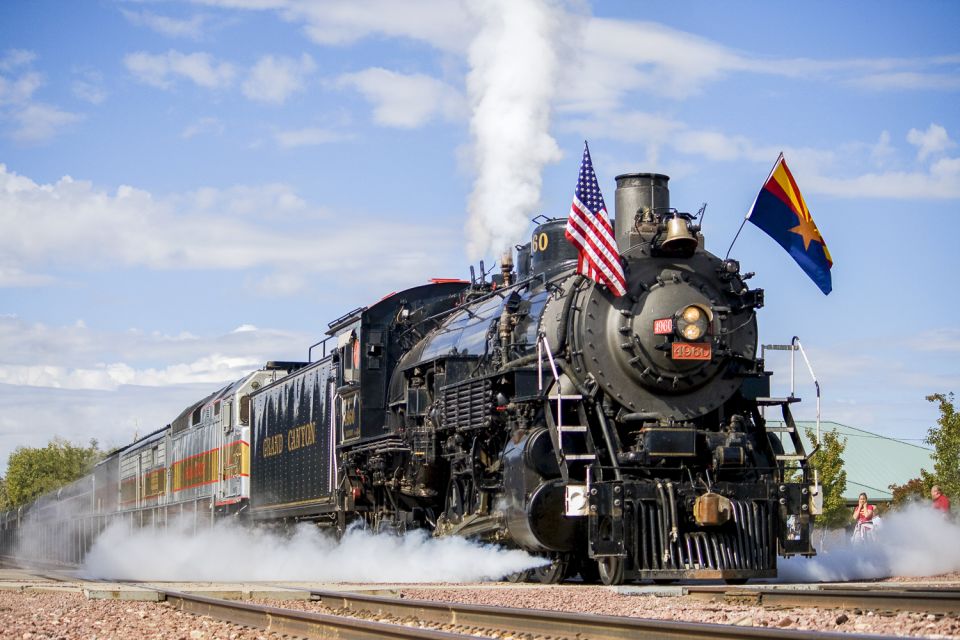
Since 1901 the Grand Canyon Railway has shuttled from Williams, Arizona, 100 km (64 miles) south of the canyon, to Grand Canyon Village in restored early-20th-century coaches. Two and a half hours of high desert and ponderosa pine forest roll past your window. Nothing readies you for the arrival. You step off the train straight into the 1910 Depot, then walk a minute to the rim. May brings fewer families with young children than the July-August crush, so the mood stays calm. The evening return departure catches the plateau's shifting light while the narration covers canyon geology and the Harvey House history that built early Southwest tourism. It also erases the parking headache, Grand Canyon Village parking fills by mid-morning on clear May days, and arriving by train sidesteps that entirely.
May Events & Festivals
What's happening during your visit
The Milky Way arches naked-eye bright above the South Rim, no telescope needed. For twenty-plus years the Grand Canyon Star Party has returned each late May or straddling the May-June boundary. Amateurs haul gear to Mather Point Amphitheater and another field near Tusayan. Saturn's rings snap into focus. The Andromeda Galaxy looks freshly minted. Phoenix and Vegas glow too far away to spoil the view. After sunset the rim cools fast, 15-18°C (59-64°F), so pack a jacket. 2026 dates weren't locked when we filed this. Check the NPS South Rim visitor center on arrival, because the event slides a week or two most years.
Packing Checklist
Bookmark this page — your progress is saved between visits
Essential Tips
Insider knowledge and common pitfalls to avoid
Book Experiences in Grand Canyon
Top-rated things to do in Grand Canyon this May
Didn't see anything interesting yet?
Browse Viator's full catalog of tours, day trips, food experiences, and private guides in Grand Canyon.
See All Grand Canyon Tours on ViatorFrequently Asked Questions
What is the Grand Canyon like in May?
May is one of the best months to visit the Grand Canyon. The South Rim sees daytime highs around 70-75°F with cool mornings in the 40s, while the North Rim (opening late May) is about 10 degrees cooler. Wildflowers bloom across the canyon, crowds are moderate compared to summer, and all hiking trails are accessible with minimal snow.
What events and activities happen at Grand Canyon National Park in May 2026?
The North Rim officially opens for the season around May 15th each year, weather permitting. Ranger-led programs resume daily on both rims, including geology talks at Yavapai Point and sunset walks along the Rim Trail. Mule rides operate daily from the South Rim, and white-water rafting season is in full swing with snowmelt creating excellent conditions on the Colorado River.
How crowded is the Grand Canyon in May?
May sees moderate crowds, busier than spring but significantly less packed than June through August. Parking at popular South Rim viewpoints like Mather Point fills by mid-morning on weekends, but you'll still find spots at Desert View or along Hermit Road. The North Rim stays quiet through the entire month since it just opens mid-May.
What should I pack for the Grand Canyon in May?
Layers are essential since temperatures swing 30-40 degrees between morning and afternoon. Bring a light jacket for sunrise (40s), sun protection for midday (UV is intense at 7,000 feet), and sturdy hiking boots if you're going below the rim where it's 20+ degrees hotter. A refillable water bottle is mandatory, dehydration happens fast even in May.
Can I hike to the bottom of the Grand Canyon in May?
Yes, and May is good for rim-to-river hikes before summer heat arrives. Temperatures at Phantom Ranch (canyon floor) reach the high 80s to low 90s in May, warm but manageable if you start before dawn. The Bright Angel and South Kaibab trails are fully clear of ice, though stream crossings on Bright Angel can be swift from snowmelt.
Do I need reservations for the Grand Canyon in May?
Lodging inside the park books up 6-13 months ahead for May, at El Tovar and Bright Angel Lodge on the South Rim. Same-day campground spots at Mather Campground (first-come, first-served) usually fill by noon. Phantom Ranch reservations open 15 months in advance and sell out within hours, though cancellations appear on the waitlist regularly.
Is the North Rim or South Rim better to visit in May?
The South Rim is the safer choice since it's fully operational all month with shuttles, visitor centers, and services running. The North Rim doesn't open until around May 15th and services phase in gradually, the lodge and campground may not be fully staffed until Memorial Day weekend. If you're visiting early May, the South Rim is your only option. Late May, the North Rim offers solitude and cooler temperatures.
What wildflowers bloom at the Grand Canyon in May?
May brings peak wildflower season, after wet winters. Look for claret cup cactus (bright red blooms), Utah agave stalks, prickly pear flowers in yellow and magenta, and lupines in purple along the South Rim trails. The North Rim meadows fill with mule's ear sunflowers and scarlet gilia once it opens mid-month.
How much does it cost to enter Grand Canyon National Park in May?
The park entrance fee is $35 per vehicle (valid 7 days) or $30 per motorcycle, unchanged in May from other months. If you're visiting multiple national parks this year, the America the Beautiful annual pass costs $80 and covers entrance fees at all federal recreation sites. Visitors on foot or bicycle pay $20 per person.