Things to Do in Grand Canyon in August
August weather, activities, events & insider tips
August Weather in Grand Canyon
Temperature, rainfall and humidity at a glance
Is August Right for You?
Weigh the advantages and considerations before booking
- + Monsoon season flips the canyon into something you won't see any other month. Towering cumulus stacks up over Kaibab Plateau every afternoon, then, 20-30 minutes after the cell collapses, low western light knives beneath the dying clouds and ignites soaked sandstone. That is the window photographers build entire trips around. Wet creosote and sage rise from the desert floor. Within days of the first downpour, rim wildflowers pop that simply don't exist here the rest of the year. Counterintuitive? Sure. August weather is still a legitimate selling point, if you know how to read the sky.
- + Fourteen hours of daylight in August. That's the edge you get over shoulder-season visitors. Wake at 4:30 AM, drop down Bright Angel Trail through Vishnu Schist and Tapeats Sandstone while the air still holds night-cool. Rim temps sit at 21°C (70°F) pre-dawn, perfect. You'll climb back out before the inner canyon turns lethal. Same long day, different payoff: watch a monsoon stack itself skyward from Hopi Point come afternoon, then linger for the copper-lit sunset. No rush to the car.
- + The North Rim is fully open in August and pulls one-tenth the traffic of the South Rim. At 2,438 m (8,000 ft), 305 m (1,000 ft) higher than the South Rim, the land feels like a different park. Ponderosa pine and quaking aspen replace pinyon-juniper scrub. Kaibab squirrels, found nowhere else on Earth, skitter across every trail. Point Imperial at 2,683 m (8,803 ft) faces northeast toward the Painted Desert and Vermilion Cliffs in a direction the South Rim can't show you. The 346 km (215-mile) drive between the rims, roughly 4.5 hours, is the main deterrent. That is what keeps the crowds exactly where you want them.
- + August is prime time for Grand Canyon rafting, period. Commercial Colorado River trips are running full schedule through August, no exceptions. The dam at Glen Canyon Dam keeps flows steady all summer, predictable whitewater, easy multi-day camping. You're floating between canyon walls that shoot up 1,600 m (5,249 ft) above the river. Sandbar camps. Zero artificial light. Just you and the Milky Way overhead. This is the Grand Canyon the rim-walking crowd never touches. August? It is one of the best months to be on the water.
- − The inner canyon in August is a different climate entirely from the rim, this kills unprepared hikers every year. While the South Rim sits around 33°C (91°F), the canyon bottom at Phantom Ranch regularly hits 43°C (109°F) or higher. No shade on the South Kaibab Trail. Heat-related rescue calls spike sharply in July and August. The NPS is unusually direct: attempting a rim-to-river-and-back day hike in summer is not recommended and has killed people. If inner-canyon hiking is on your list, the timing discipline required, on the trail before 5 AM, turning around at Havasupai Gardens, no exceptions, needs to be built into your plans well before you arrive.
- − August is peak season on the South Rim, full stop. Mather Point and the Bright Angel Trailhead are already crowded by 8 AM. Parking fills before 6 AM on weekends. The timed-entry vehicle permit requirements, NPS has been testing and tweaking these during summer peak hours since 2021, can turn an unplanned arrival into a long wait or a turned-away day. These permits open 90 days in advance on recreation.gov and sell out fast for summer weekends. Check current 2026 requirements before you lock in plans. The policy keeps shifting.
- − Lightning isn't scenery, it's a live wire. Monsoon afternoons crackle above the rims, a hazard that'll kill you faster than the view will impress you. The South Kaibab Trail clings to exposed ridges without a scrap of shelter. Storms boil up over the Kaibab Plateau between noon and 4 PM, moving faster than your boots can pound downhill to safety. Any hike that hasn't dumped you back at the rim by midday is a gamble in August. This single fact compresses your safe window brutally, you'll start well before dawn, or you'll stick to the rim trail and call it a day.
Best Activities in August
Top things to do during your visit
Start at 4:30 AM. Headlamp on. The Bright Angel Trail is the defining Grand Canyon hike, and August is the month when timing turns it from an ordinary trail experience into something requiring real discipline, and delivering something extraordinary in return. You descend through Kaibab Limestone, Coconino Sandstone, and Hermit Shale in deep pre-dawn shadow, the air still cool at 21°C (70°F), while the canyon floor is a 1,600 m (5,249 ft) drop of absolute dark below you. By 6:30 AM the walls catch their first direct morning light; you're likely at the 1.5-Mile or 3-Mile Resthouse, drinking from the year-round water stations the NPS keeps running specifically for this route. Havasupai Gardens, the former Indian Garden, renamed for the tribe that farmed this oasis for centuries, sitting at 1,490 m (4,880 ft) and 7.5 km (4.7 miles) from the rim, has cottonwood trees that create genuine shade beside a spring-fed creek. This is where summer hikers should turn around. The additional 4.8 km (3 miles) to the river and back is not safe in August heat for anyone who didn't spend the night at Phantom Ranch. Plan to be back at the rim by 10 AM.
August is prime time on the 446 km (277-mile) Colorado River corridor through Grand Canyon, no snowmelt, no guesswork. Glen Canyon Dam keeps the flow steady, so the 160-plus rapids hit predictable midsummer levels instead of the spring chaos that flips rafts in April. Hance Rapid still churns brown, and Lava Falls remains technical. But you won't fight increase. Motorized trips knock off the full canyon in 6-8 days; oar-powered boats stretch it to 12-18. Both stop long enough at Elves Chasm, Deer Creek Falls, and Havasu Creek to turn mileage into exploration. You'll swim mossy travertine pools, stand under the 30 m (98 ft) plunge at Deer Creek, and watch turquoise Havasu water slide in from Havasupai land. Camp arrives on sandbars wedged beneath 1,600 m (5,249 ft) of rock. Zero light pollution. The star load overhead resets your definition of dark sky. No road reaches most of this canyon, just river, rock, and the Milky Way on repeat.
August's monsoon weather, most visitors curse it, draws serious Southwest landscape photographers like clockwork. The cloud towers that boil up over the Kaibab Plateau between noon and 4 PM sculpt skies no flat May blue can touch. You've got 20-30 minutes after a storm clears. That's when low western light slices under the breaking cloud base and ignites still-wet canyon walls in reds and golds dry-season tourists never witness. Beyond Mather Point, where tour buses stack three deep, Hopi Point on Hermit Road faces west and delivers the widest open panorama from any road-accessible South Rim perch, the Colorado River bends through the canyon's full depth here in a way Mather Point shots never capture. Yavapai Point, 800 m (0.5 miles) east of Mather with an attached geology museum, draws a sliver of sunrise crowds while serving the same eastern view. Guided photo tours that roll onto Hermit Road viewpoints by pre-dawn shuttle lock in the canyon during the hour before day-trippers flood in.
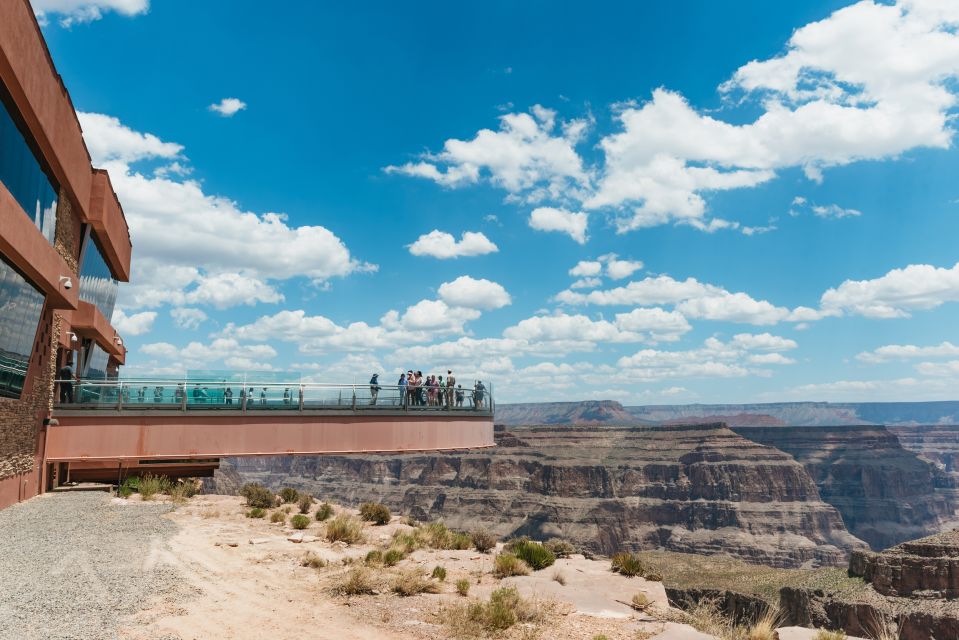
29 km (18 miles) across at its widest point. 1,600 m (5,249 ft) deep at its deepest measured point. Walking the rim gives you the numbers. The helicopter gives you the gut punch, one you can't prep for. Looking straight down at the Colorado River threading between walls of Precambrian rock 1,600 m (5,249 ft) below, rock laid down 1.8 billion years ago, visible in distinct banded layers as the aircraft drops into canyon airspace, rewires your sense of time more than any interpretive sign manages. August morning flights, launching before 8 AM when the air stays stable before convection builds, often take off with first monsoon cloud formations on the horizon. This adds a dimension to the aerial view that dry-season tours can't match. Pilots steer around active storm cells as routine business. The cumulus towers over canyon walls in afternoon light create a backdrop that clear-weather tours simply don't have.
October 15. That's the hard stop. The North Rim closes October 15 each year, which makes August one of the last full months it is operating, and one of the best reasons to visit now rather than waiting for the cooler, crowd-reduced shoulder season that never materializes on this side. The 346 km (215-mile) drive from the South Rim takes roughly 4.5 hours, which is exactly why the North Rim gets a fraction of the South Rim's visitors despite offering views that are, in certain respects, more dramatic. At 2,438 m (8,000 ft), the rim forest runs to Engelmann spruce and white fir at the highest elevations, and the canyon perspectives from Point Imperial (2,683 m / 8,803 ft) and Cape Royal look across to the South Rim from the opposite direction, you are seeing the canyon from the north wall, which is the inside of the story most visitors only hear one side of. The North Kaibab Trail in its upper 4.8 km (3 miles) passes through hanging gardens of columbine and monkey flower fed by seeps that the drier South Rim does not have. It is a different kind of canyon experience, and staying overnight at the North Rim Lodge to watch the monsoon build over the canyon at sunset is worth the extra planning.
Desert View Drive gives you 40 km (25 miles) of South Rim edge from Grand Canyon Village straight to Desert View Watchtower, six overlooks worth stopping for, including Grandview Point, Moran Point, Lipan Point, and the Watchtower itself. The 1932 Watchtower, Mary Colter's uncut-stone homage to ancestral Puebloan towers, perches at 2,259 m (7,438 ft) and serves up the longest unobstructed Colorado River view reachable by car on the South Rim. On clear August mornings you'll track the river for roughly 50 km (31 miles) eastward, an arc the Village viewpoints simply can't match. Ride the road before 7 AM and you beat both heat and traffic. After 9 AM the cars pour in from Tusayan and the shoulder shrinks. Pavement rolls, never punishes, and the eastern stretch lays bare Kaibab Limestone layers the crowded Village overlooks hide. Most guided cycling tours roll with a support van and a shuttle back, you won't grind out the full 80 km (50-mile) loop unless you insist.
Didn't see anything interesting yet?
Browse Viator's full catalog of tours, day trips, food experiences, and private guides in Grand Canyon.
See All Grand Canyon Tours on ViatorPacking Checklist
Bookmark this page — your progress is saved between visits
Climate-specific gear, brand recommendations, and what to leave at home.
View Grand Canyon Packing List →Essential Tips
Insider knowledge and common pitfalls to avoid
Ready to plan your trip to Grand Canyon?
Now that you've got the research covered, here's where to go next.
Book Experiences in Grand Canyon
Top-rated things to do in Grand Canyon this August